
Select Applicants Strategically | Landlord Profitability Play # 5
Tenant selection is the single most important decision a landlord makes.
The tenant you choose today will determine your cash flow, stress level, and property condition for the next year — sometimes longer. Get it wrong, and no amount of good marketing, rent increases, or systems will fully undo the damage.
That’s why Profitability Play #5: Select Applicants Strategically may be the most critical play in the entire Landlord Profitability Playbook.
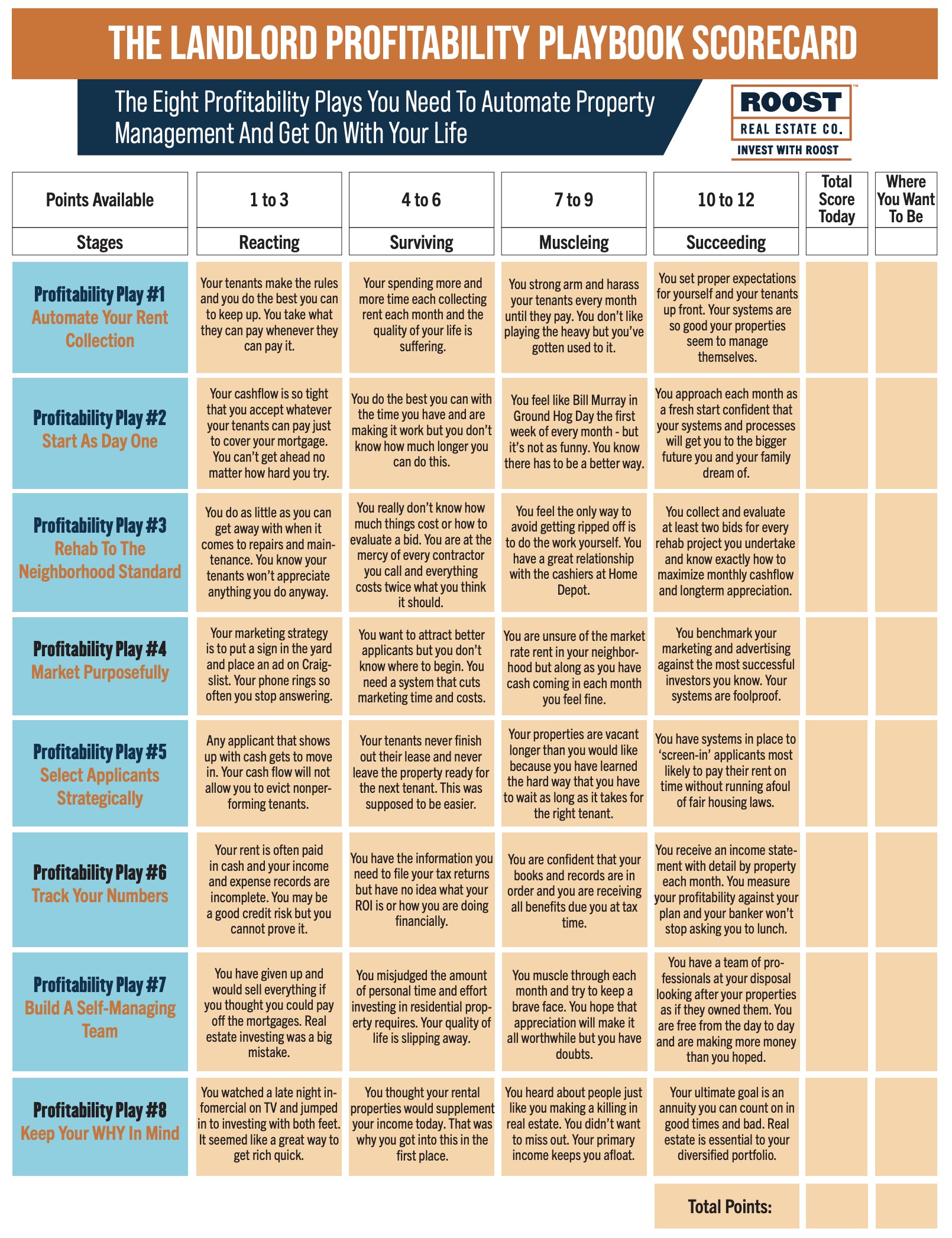
👉 Click here to download the Landlord Profitability Playbook Scorecard, and let’s walk through the four stages to see how purposeful your marketing strategy really is.
Why Tenant Selection Matters More Than Almost Anything Else
Landlords often focus on:
- Filling vacancies quickly
- Maximizing rent
- Minimizing maintenance
But none of those matter if the wrong tenant is placed.
A bad tenant doesn’t just cost rent — they create:
- Late or missing payments
- Property damage
- Conflict and stress
- Expensive turnovers
- Legal risk
Strong tenant selection protects everything else in your business.
Below, we break down the four stages of tenant selection so you can identify where your current process falls — and what it takes to move forward.
Stage 1: Reacting (1–3 Points)
At this stage, financial pressure dictates decisions.
If an applicant shows up with cash for the deposit and first month’s rent, they move in. Screening is minimal or nonexistent — not because you don’t care, but because vacancy feels unaffordable.
The problem is that poor tenants:
- Pay late or not at all
- Damage the property
- Create conflict
- Cost more than they bring in
This traps landlords in a cycle of stress and desperation, where every decision is reactive instead of strategic.
Stage 2: Surviving (4–6 Points)
Here, landlords add some screening:
- Income checks
- Credit pulls
- Basic references
But problem tenants still slip through.
Leases end early. Properties aren’t returned in good condition. Rent balances remain unpaid. Each turnover brings lost rent, repairs, and emotional exhaustion.
You know your process isn’t working — but you can’t quite pinpoint what’s missing.
Stage 3: Muscling (7–9 Points)
At this stage, landlords finally recognize a hard truth:
A bad tenant costs more than a vacancy.
You become strict. You require full documentation, solid credit, verifiable income, and references. You’re willing to let a property sit rather than rush a lease.
This is safer — but still stressful.
Vacancy anxiety creeps in. Every day without rent feels heavy. The process works, but only because you are constantly policing it.
It’s better than before, but it isn’t scalable or peaceful.
Stage 4: Succeeding (10–12 Points)
This is where tenant selection becomes a true asset.
Instead of just screening out bad tenants, your process actively attracts good ones.
At this stage, landlords use:
- Clear, published screening criteria
- Online applications and documentation
- Employment and landlord verification
- Consistent, compliant decision-making
They also recognize early green flags:
- Prompt communication
- Complete applications
- Respectful behavior during showings
The result?
- Longer tenancies
- On-time rent
- Better property care
- Less stress and fewer surprises
Your process runs the selection — not emotions, pressure, or urgency.
The Real Question to Ask Yourself
Think about your last few tenants:
- How did you choose them?
- How long did they stay?
- What condition did they leave the property in?
Those outcomes weren’t luck. They were the result of your selection process.
Tenant selection can be your biggest liability — or your strongest protection.
About the Landlord Profitability Playbook Video Series
In this video series, we’re going to walk through the eight profitability plays that separate successful real estate investors from those who are just surviving – or worse, failing.
So click here to grab the free scorecard, and follow along. This isn’t just another assessment tool – it’s your roadmap from wherever you are today to where you want to be 12 months from now.
Invest with Confidence—Invest with ROOST
At ROOST Real Estate Co., we know that profitability is the ultimate goal. That’s why we work so hard to ensure your properties are maintained to the neighborhood standard, marketed well, and rented to the right tenants.
PLUS… Whenever you’re ready, here are three ways we can help you automate your rent collection and get on with your life:
- Learn practical ways to free up your time and increase your profits. Listen to The Landlord Profitability Playbook Podcast at www.LandlordProfitabilityPlaybookPodcast.com
- Get a FREE Market Rate Rent Analysis for your properties. Sometimes a second opinion can make a big difference in your business. www.MarketRateRent.com
- Get a Personalized Property Management Quote and free property management consultation with Gretchen Mitchell at www.PMServicesQuote.com.

Chris McAllister
Chris McAllister was first licensed as a real estate broker in Ohio in 2003 and in Florida in 2015. He founded ROOST Real Estate Co. in early 2014.
Chris’s passion is creating and coaching business opportunities and strategies that support and add value to real estate professionals and their clients. He is the author of several books on the profession, including Protecting the Goose that Lays the Golden Eggs and Eight Success Habits of the New Real Estate Professional.
As both a real estate investor and landlord advocate, Chris also wrote What to Expect from Your Property Manager (Even if Your Property Manager is You) and The Landlord Profitability Playbook — a system for automating property management and reclaiming your time.
Chris is also the host of several podcasts, including Connect, Practice, Track, and Grow for real estate professionals, The Landlord Profitability Playbook Podcast for residential real estate investors, and The All Things Real Estate Podcast for home buyers and sellers.
Follow Chris on LinkedIn, YouTube, and Facebook for new episodes, insights, and landlord profitability strategies.